
Hello Bloggers, I haven't been able to blog much lately with my new project, my engagement and finishing up my licensing exams. I do; however, have a new blog! While studying for my exams, I found it helpful to come up with tricks to help me remember the info. On this new blog, I'll be sharing ARE information using my study techniques. Hope you enjoy :) Kim
http://kimsguides.blogspot.com/
Thursday, August 25, 2011

Tuesday, June 21, 2011
Escola Primaria-Portuguese Architecture


In the 1940s , the New State of the Centennial Plan launched a program of school construction in mass that was intended to allow all children to have a Portuguese school at your fingertips, enabling you to increase the level of public education. Schools Plan of centenarians were built according to models typified adapted to local conditions, which allied with the feature traditional Portuguese architecture. Until the 1960s , were built more than 7000 of these schools, going to be at least one in almost all parts of the country, what became a trademark of Portugal.


The photos above were taken while I was at the Escola Primaria restaurant somewhere between Grandola and Santiago do Cacem.
Friday, June 10, 2011
Lunch time stroll through Midtown


There's a giant head on exhibit in Madison Square Park. I watched as a few artists painted their own interpretations of the extra large white head by Spanish Sculptor Jaume Plensa.

The Van Alen Book Store on 22nd Street designed by LOT-EK. To be honest, I have never heard of this firm until now. Their website sort of looks like the bookstore with its NEON YELLOW font type. I do appreciate this innovative idea of making stadium style seating with multiple doors suspended by steel cables. I would probably linger in this store a lot longer than I would linger near the giant head in Madison Square Park.


My final stop on my lunchtime stroll is Limelight market. This old church was renovated into a mini-mall, Ya'll! A mini-mall!


The reason for my lunchtime stroll: Grimaldi's Pizza (located in Limelight).

Wednesday, June 8, 2011
Dallas & Fort Worth, Texas
Dallas is not only known for its amazing BBQ and "hair-so-high it can talk to Jesus", but it also known for its downtown art district with numerous starchitect museums, opera houses, & theaters. Fort Worth is only 35 miles away and holds architecture gems of its own.


AT&T Performing Arts Center Dee and Charles Wyly Theatre, 2009 REX/OMA, Joshua Prince-Ramos (partner in charge) and Rem Koolhaas


AT&T Performing Arts Center
Margot and Bill Winspear Opera House, 2009 Foster + Partners, Norman Foster
Margot and Bill Winspear Opera House, 2009 Foster + Partners, Norman Foster

Morton H. Meyerson Symphony Cente, 1989 I.M. Pei


Nasher Sculpture Center, 2003 Renzo Piano
http://www.thedallasartsdistrict.org/art-in-architecture/architecture/


Kimbell Art Museum, Louis Kahn, recognized for its use in daylighting interior gallery space.


The Modern Art Museum, Tadao Ando, whose architecture boost of pure minimal forms.


Saturday, May 28, 2011


Saturday, April 2, 2011
Hate it or Love it?
 |
| New Dream Hotel, Chelsea, NYC |
I was walking over to Prince Lumber this morning and passed the new Dream Downtown Hotel which abuts the Maritime Hotel. I spent a few minutes googling "new addition to Maritime", but couldn't find any info. After reading a curbed article, I realized it is not a new structure at all. The new skin was added by hotelier Vikram Chatwal and the structure is being converted into a hip hotel. It's kinda close to another hip hotel! So do you hate it or love it?
 |
| Dream Hotel and Maritime Hotel, by Albert Ledner |
Tuesday, March 22, 2011
Friend's Projects: Historical Museum in Manhattan

On a friday evening in Lower Manhattan, my good friends, also architects, and I gather in a small, crowded wine bar and ask each other "How's work?" Sometimes the answers are the same "Ah, good, nothing new"; sometimes the answers are more colorful with stories about demanding clients or peculiar engineers or even overly ambitious interior designers. But it seems that like-minded architects love to share stories of our frustrations, but after the project is over, we can boast about our accomplishments "I helped to build that building. That building on this street, in one of America's most amazing cities, and there it will remain for eternity" (okay maybe not eternity but you get the point).
I guess its true that "Bird's of a feather flock together". Of all my friends, over half are architects & designers. That's why I decided to post some of their current projects and achievements. As architects, sometimes we are only exposed to the great new projects, the "bank of america LEED" buildings or the ultra modern homes build on stark naked landscapes by some swedish firm whose name I cannot pronounce. But what about projects happening all around us. The projects that help build the fabric of an urban landscape. These projects matter too.
Project Description: NY Museum with Landmark Status recognized by City and State, (also built on landmark site on landmark block).
Location: Manhattan
KP: What are some the challenges you have experienced working with a building built in 1850?
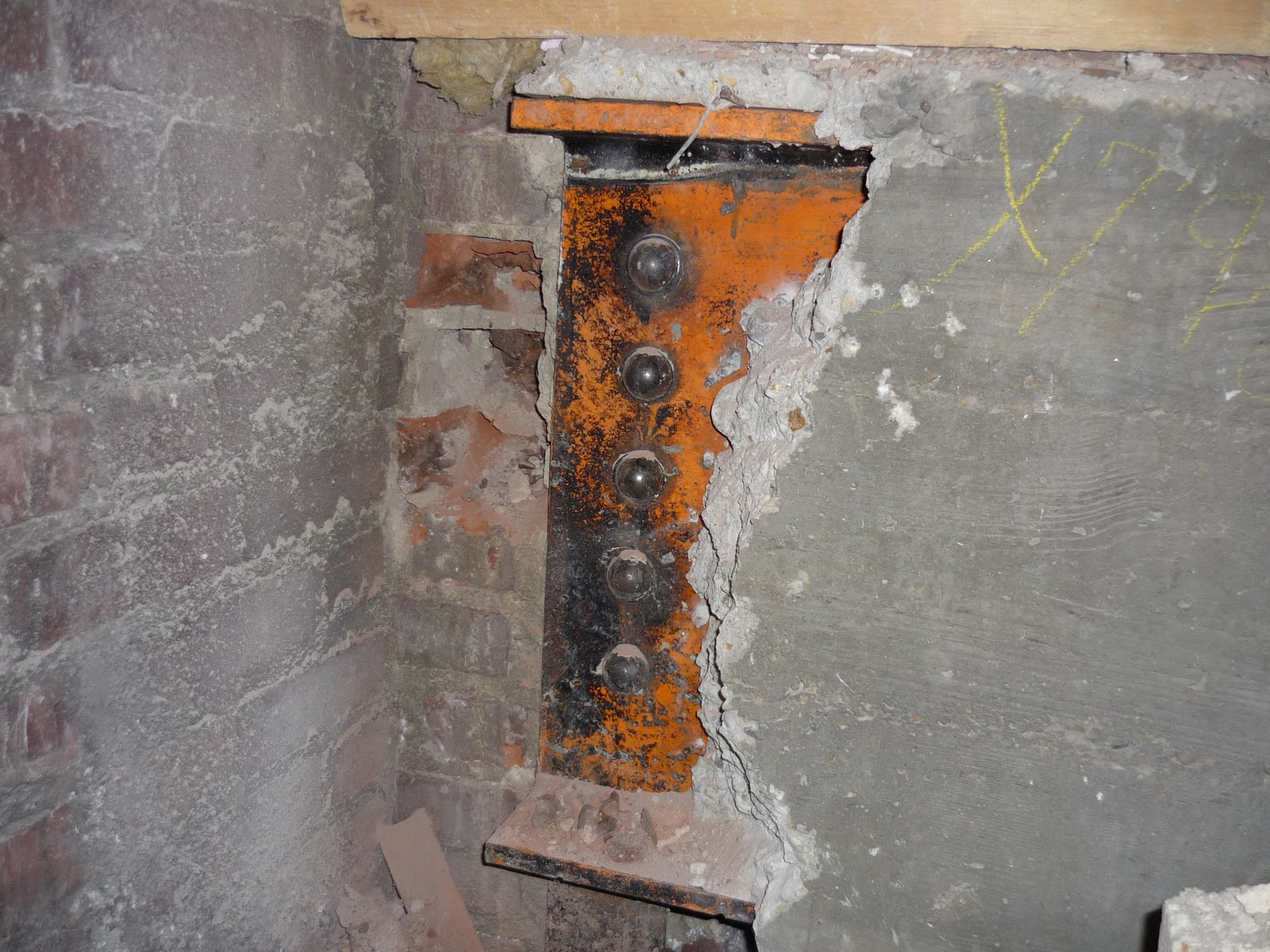
BA: Actually it’s more like 1900, but who’s counting? I think the biggest challenges with it by far are integrating state-of-the-art building systems with a building designed when these things hadn’t even been conceived of yet. I mean, the only air-conditioning technology they had when it was built were windows and fireplace, which means there is absolutely NO place to hide anything. It makes you appreciate just how much of a seemingly clean, simple interior relies on generous service space and hollow walls. Another challenge is that what updating has gone on over the last 100 years has been piece-meal and pretty slap-dash, so you find things like a fire extinguisher cabinet put in in the 60s that is supporting a 20’ terra cotta wall – a structural fire extinguisher.
BA: Actually it’s more like 1900, but who’s counting? I think the biggest challenges with it by far are integrating state-of-the-art building systems with a building designed when these things hadn’t even been conceived of yet. I mean, the only air-conditioning technology they had when it was built were windows and fireplace, which means there is absolutely NO place to hide anything. It makes you appreciate just how much of a seemingly clean, simple interior relies on generous service space and hollow walls. Another challenge is that what updating has gone on over the last 100 years has been piece-meal and pretty slap-dash, so you find things like a fire extinguisher cabinet put in in the 60s that is supporting a 20’ terra cotta wall – a structural fire extinguisher.

KP: Has the community been mostly "in favor" of the changes to the Landmarked building?
BA: I think so. There are always going to be a lot of squeaky wheels in the city, but those familiar with the accurate details of the project and supportive.
KP: What has been the strangest things you have encountered working on site?
BA: Well, there was the structural fire extinguisher… I don’t know if it’s strange, but the coolest thing was the scraps of newspaper from 1900 I found while crawling around above a plaster ceiling. Every time we open up a wall that has not been opened in a while, there’s weird things architecturally, details that haven’t been used in years.
BA: I think so. There are always going to be a lot of squeaky wheels in the city, but those familiar with the accurate details of the project and supportive.
KP: What has been the strangest things you have encountered working on site?
BA: Well, there was the structural fire extinguisher… I don’t know if it’s strange, but the coolest thing was the scraps of newspaper from 1900 I found while crawling around above a plaster ceiling. Every time we open up a wall that has not been opened in a while, there’s weird things architecturally, details that haven’t been used in years.

KP: Many designers travel to quarries or manufacturing sites for tests, Have you traveled much working on this project?
BA: Just to the metal fabricator’s workshop, as there’s extensive metal work on the job, and lots of restoration pieces. The contractor looked at farming out some of the metal work to China, which might have meant a trip to Beijing. Oh, and I may get to go to Toronto to see this really cool sculptural ceiling we’re having cast out of plaster.
BA: Just to the metal fabricator’s workshop, as there’s extensive metal work on the job, and lots of restoration pieces. The contractor looked at farming out some of the metal work to China, which might have meant a trip to Beijing. Oh, and I may get to go to Toronto to see this really cool sculptural ceiling we’re having cast out of plaster.

KP: How would you compare working on a museum with other projects? What amount of detail is given in preserving the originate materials?
BA: Well the museum aspect is one thing. There’s a tremendous amount of environmental and lighting technology, and you have to be clever with everything so that it’s not noticeable – you want a clean white box and you want to control what people notice, which is not the thermostat. Then there’s the preservation aspect with elements we are keeping or integrating into our intervention. You learn little facts about old materials and how to treat them. I’ve probably learned the most about metal and how it ages.
BA: Well the museum aspect is one thing. There’s a tremendous amount of environmental and lighting technology, and you have to be clever with everything so that it’s not noticeable – you want a clean white box and you want to control what people notice, which is not the thermostat. Then there’s the preservation aspect with elements we are keeping or integrating into our intervention. You learn little facts about old materials and how to treat them. I’ve probably learned the most about metal and how it ages.
KP: What person or experience has given you the most insight or knowledge that you can away from this project?
BA: It’s a hodge-podge, every tradesman has taught me a little something about something. The associate I’m working with has a lot of experience with dealing with a job – the construction and politics of it. I guess the biggest insight is that no matter how bad the “Oh crap” moment you have, there’s a solution to be found. Lots of design improv has to be done when you don’t know for certain what’s behind walls.
BA: It’s a hodge-podge, every tradesman has taught me a little something about something. The associate I’m working with has a lot of experience with dealing with a job – the construction and politics of it. I guess the biggest insight is that no matter how bad the “Oh crap” moment you have, there’s a solution to be found. Lots of design improv has to be done when you don’t know for certain what’s behind walls.

KP: What building in history best represents you as an architect?
BA: The Pantheon - well-rounded and always near good pizza.
BA: The Pantheon - well-rounded and always near good pizza.

Subscribe to:
Posts (Atom)


 Posts
Posts

